
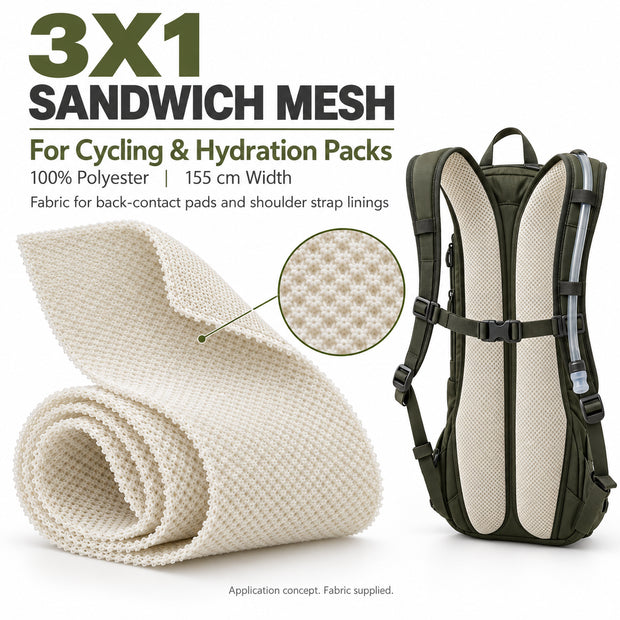
3X1 shown
Cycling & Hydration Packs
Back-pad faces and shoulder strap linings

Yuanyue Textile · Established 2001
Source warp-knitted sandwich mesh for back panels, shoulder straps and other padded contact areas. Compare swatches and specifications before requesting samples or a production quote.
Warp-knitting process illustration
Choose the part you’re developing to see how the mesh is used and which fabric models to sample. Yuanyue supplies the mesh fabric for the applications shown.
Back-pad faces and shoulder strap linings
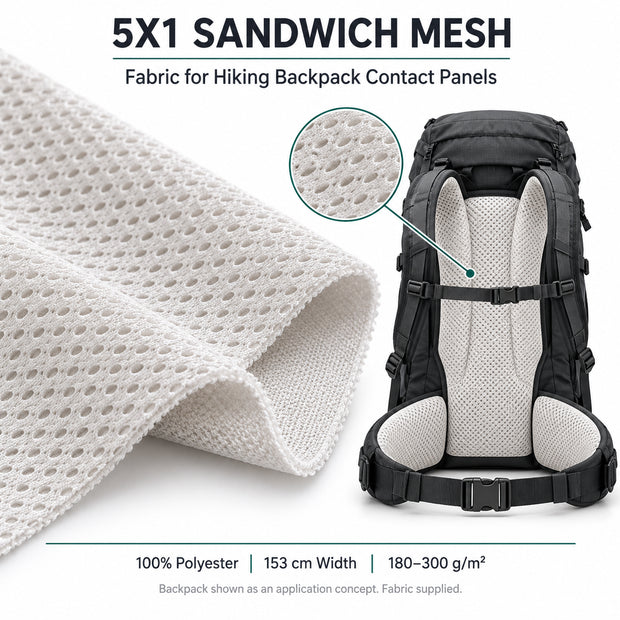
Padded back-contact panels
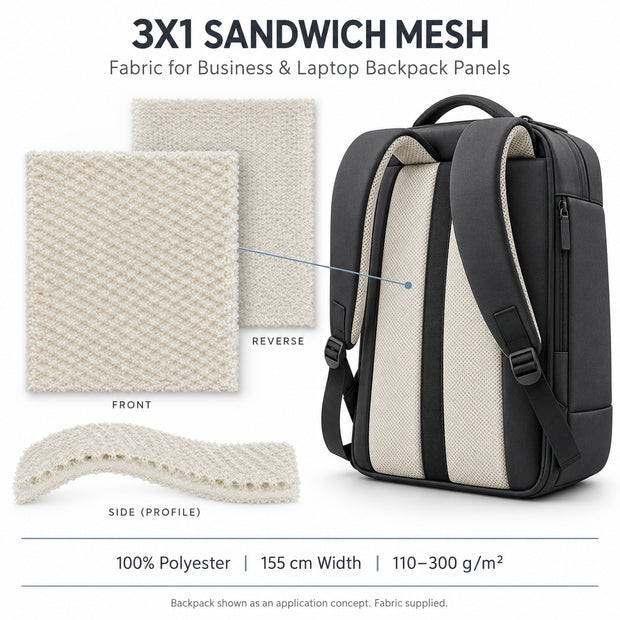
Back pads and shoulder strap linings
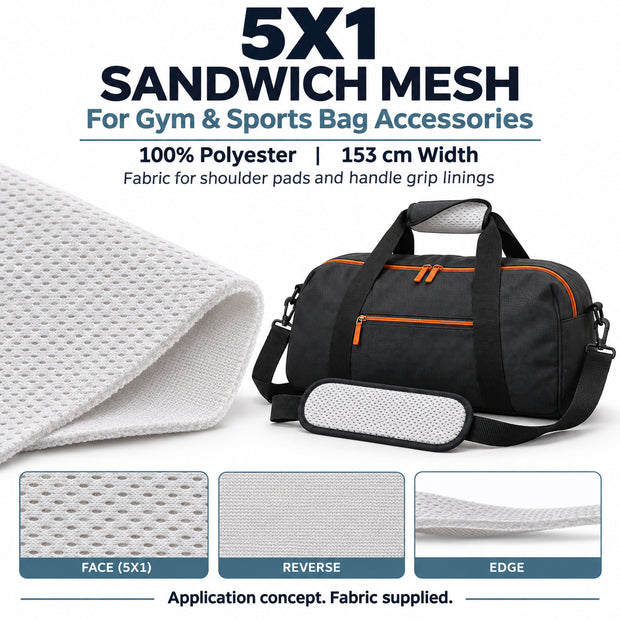
Detachable shoulder pads and handle grip linings
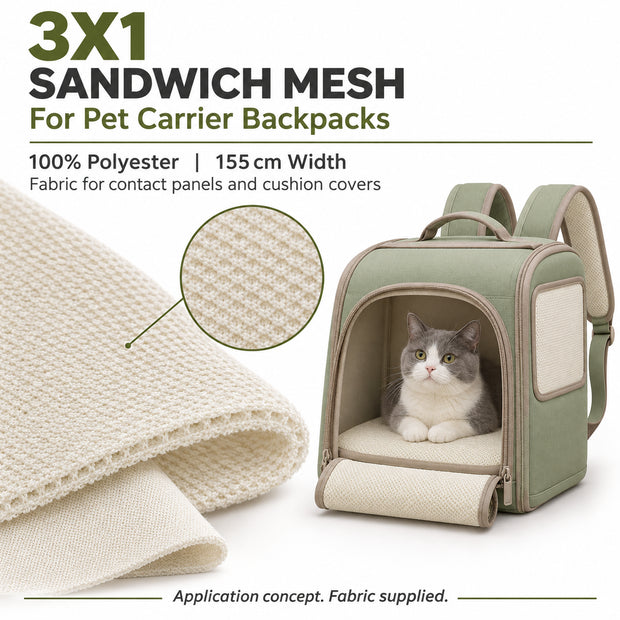
Contact panels and cushion covers
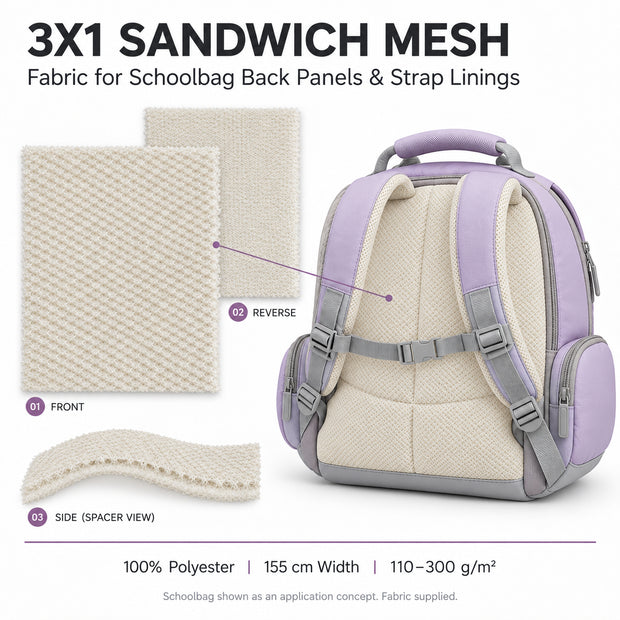
Back panels and shoulder strap linings
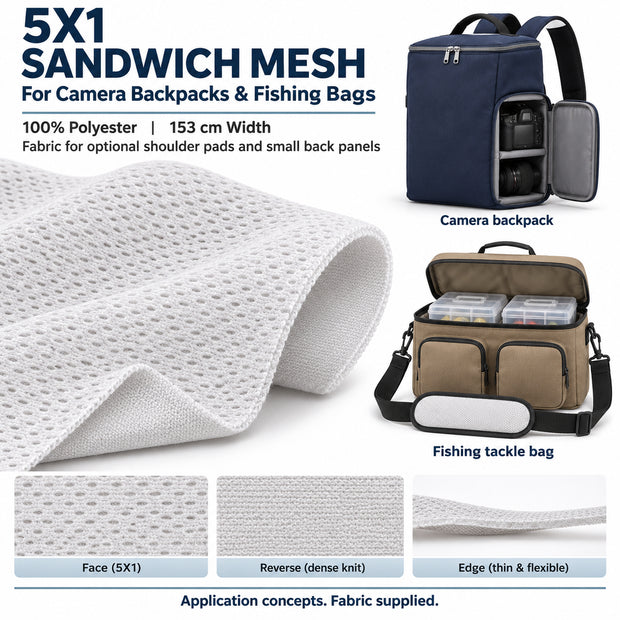
Shoulder pads and small back panels
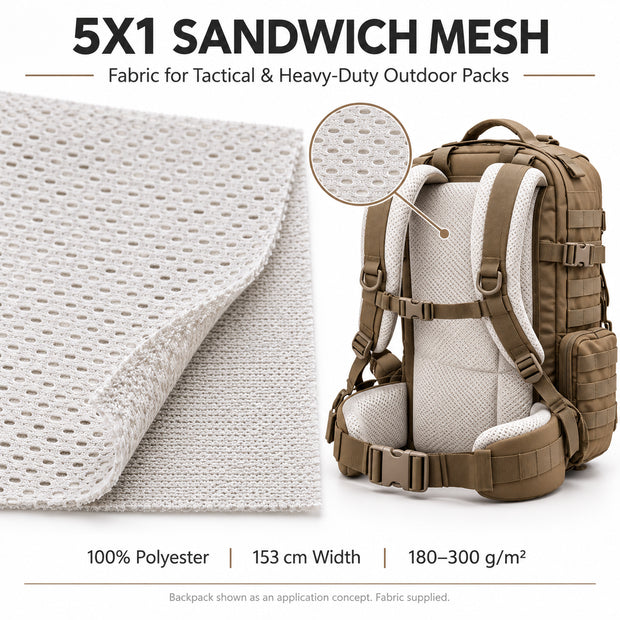
Padded back panels and strap linings
Find sample options for the part you’re developing. Compare 3X1 and 5X1 at the same 180 g/m² double backing to see how the two mesh faces differ.

Back-pad facings and strap linings

Back-contact panels and detachable pads


Foam-backed seat covers and padded backrests

Cushion covers and backrest linings

Liner and comfort pad fabrics
Single and double refer to the backing. Confirm thickness, feel and fit on a physical swatch.
8 face patterns and 41 catalog specifications. Compare nominal width, backing and individual weights in g/m². All listed fabrics are warp-knitted, non-stretch, 100% polyester (75D × 75D).

Backpack back panels and shoulder straps

Backpack contact areas

Footwear and helmet comfort components

Footwear and helmet comfort components

Office chair upholstery

Office chair upholstery

Sofa and seating upholstery

Footwear swatches and selected helmet comfort-liner trials
We have manufactured warp-knitted spacer mesh in Li County, Baoding, Hebei, China, since 2001. We supply bag brands, OEM factories and component makers with fabrics for backpack back pads, shoulder straps and other contact areas.
Our catalog also covers footwear, upholstered seating and helmet comfort components. Sourcing teams can compare the face pattern, backing, weight and width on physical swatches, then discuss color, construction and quantity before confirming a bulk specification.
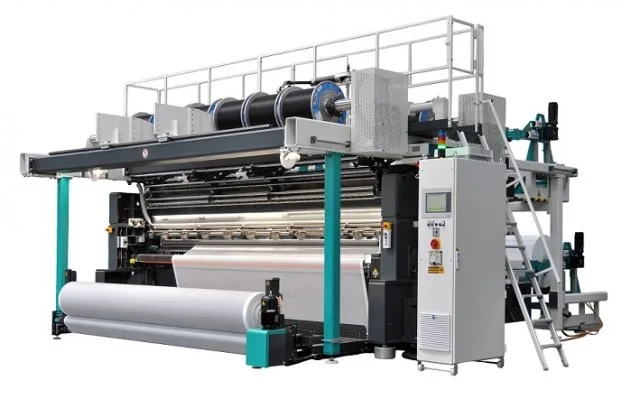
Selected equipment within our 103-machine production setup.
25 years in textile manufacturing.
Production site in Li County, Hebei.
Actual order timing is confirmed by specification and volume.
Includes 36 German KARL MAYER warp-knitting machines.
People supporting manufacturing and order delivery.
Manufacturing
Two knitted faces are joined by spacer yarns. Face opening, backing and layer separation are design choices that affect air passage, surface feel and how the material compresses in a component.

The mesh face defines the surface pattern, the spacer yarns maintain separation, and the knitted backing forms the reverse surface. Share your target airflow, compression or abrasion method so the selected fabric can be reviewed against it.
Structure illustration from Air Mesh Supply.
Request the certificate, facility audit or test report that matches your fabric, finish and destination market.
For harmful-substance requirements, ask for the certificate number, covered article and product class for your fabric. The product class depends on intended use and degree of skin contact.
For orders specifying recycled content and chain of custody. Request the scope certificate and check whether the shipment requires a transaction certificate.
For supplier qualification and quality-system review. Ask which manufacturing site and activities the documentation covers.
For responsible sourcing reviews. Ask for the latest applicable facility audit and check the site and date.
Send the fabric model, finish, target and required method so the report can be matched to the tested sample.
Measures flame propagation under specified test conditions. Ask for the applicable method and report for the selected construction and finish.
For projects with a biological evaluation requirement. Share the application, contact conditions and specific test part requested by your team.
Compare mesh faces, select fabrics for commuter and outdoor packs, and prepare a swatch request.

 3X1 vs. 5X1 Spacer Mesh for Backpack Development
Compare width, weight and backing options, then choose a matched pair of swatches for your prototype.
If you are developing a backpack back panel or shoulder strap, 3X1 and 5X1 give you two mesh faces to compare. Start with the target weight, backing and fabric width, then compare physical swatches in the same component.
Both models are non-stretch, warp-knitted fabrics made from 100% polyester with 75D × 75D yarn.
Use the listed width for your first cutting estimate and ask us to confirm usable width for the specification you select.
For a controlled first trial, request both models in 180 g/m² with double backing. Keep the pattern, padding, lining and seam construction the same. Compare the appearance of the mesh face, how the backing handles during sewing, and how the finished panel feels under load.
If the project calls for a lighter single-backing option, start with the listed 3X1 samples. Check thickness and compression on the sample assembly. If your team has an airflow or abrasion requirement, include the test method and target when you ask for samples.
Compare all catalog fabrics · Request a 3X1 and 5X1 swatch comparison
 Choosing Spacer Mesh for Backpack Back Panels and Shoulder Straps
Check surface feel, seam bulk and fit in the part you are developing before confirming a mesh specification.
Start with the part of the backpack that will use the mesh. A back panel may have a large padded area with seams and ventilation channels. A shoulder strap has tighter curves and narrower seams. Build one prototype of each part if you want to use the same fabric across both.
Show the panel shape, padding layout and the parts that touch the wearer. Compare mesh face, backing and thickness over the intended padding. Check the contact area with the pack loaded as intended, and look for changes in surface feel and fit where the panel bends.
Send the strap pattern and the tightest curve the fabric has to follow. Sew a short strap trial with your planned foam, lining and edge finish. Check whether the seam closes cleanly, how much bulk builds up at folded edges and how the strap feels against clothing.
For a first shortlist, compare 3X1 and 5X1 at a shared catalog weight and backing. Once a swatch feels right, confirm it on the sewn assembly before finalizing your order specification.
Commuter pack fabric · Trekking pack fabric · Request mesh swatches for your backpack prototype
 What to Include in a Spacer Mesh Swatch Request or RFQ
Send the model, component, specifications, quantity and destination so we can review your project.
A clear swatch request or request for quotation (RFQ) helps us match fabric options to the component you are developing. Share what you know, even if some specifications are still open.
Add your estimated quantity and preferred unit, quantity by color when available, and destination country. Include the target timing if it matters to the project. If you need a certificate or test report, give the standard or method and identify the exact material and finish you want it to cover.
We are developing a camera backpack back panel. Please help us compare 3X1 and 5X1, both 180 g/m² with double backing, for a sewn prototype. Our preferred color is black. The estimated production quantity is 500 metres, with delivery to Germany. Please let us know which swatches and documentation are available for the proposed fabric.
Find a fabric model to reference · Send your swatch request or RFQ
Sampling and bulk sourcing
Send your fabric model or a reference photo, the part that needs mesh, your target specifications and estimated quantity. We can discuss swatches and confirm what is needed for a quote.


